
Medieval Idle King
MTAG PUBLISHING LTDSimulation
3.7187.00 Reviews
- Version
- 0.5
- Installs
- 100.00K
- Age Rating
- Everyone
Screenshots
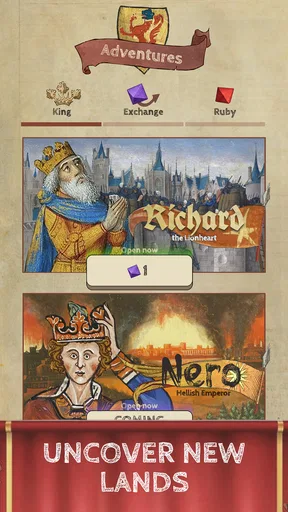
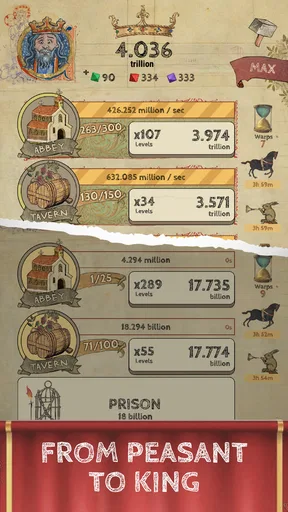
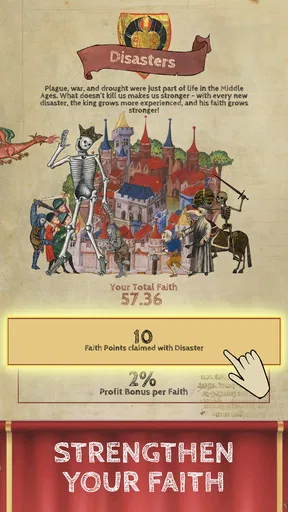
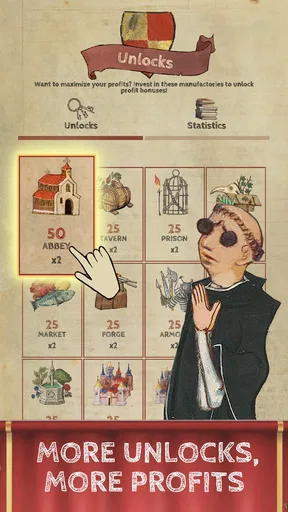
Our Review of Medieval Idle King
 Analysis by Appyee
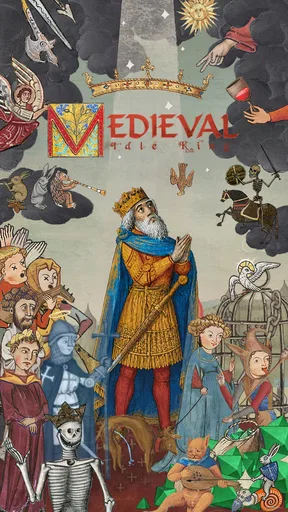
I spent time with Medieval Idle King as a light medieval kingdom simulation, and my first impression was easy to understand: it is built for players who enjoy watching a small realm become busier and more productive over time. The central appeal is the combination of building, automation, and gradual growth, wrapped in a deliberately chaotic medieval setting. It is not trying to be a demanding strategy epic. Instead, it fits the idle-game habit of making a few decisions, letting progress accumulate, and returning later to improve the next stage of development.
That makes the game approachable, but it also creates an important expectation. You are not downloading a deep historical simulator or a fast action game. You are choosing a compact management experience in which the satisfaction comes from improving a kingdom’s routine. I found that the best way to enjoy it is to treat each visit as a short planning session rather than expecting constant excitement. The game is free to start, has an Everyone age rating, and comes from MTAG PUBLISHING LTD.
How the kingdom-building loop feels in practice
I find the most useful way to judge the kingdom-building loop is to notice whether each visit leaves me with a clear next decision, rather than simply more things to tap. That distinction helps separate satisfying idle progress from routine checking, especially when I’m fitting a game around a busy day. It also sets up the practical question of how much that steady rhythm is worth to you.
A simple premise with a useful rhythm
The idea of ruling a troubled medieval kingdom gives the game a clear identity, even though the moment-to-moment experience is closer to an idle management title than a traditional medieval adventure. I approached each session by looking at what had accumulated, deciding where the next improvement would have the greatest effect, and then leaving the kingdom to continue working. That rhythm is comfortable when I have only a few minutes, such as during a commute or while waiting for an appointment.
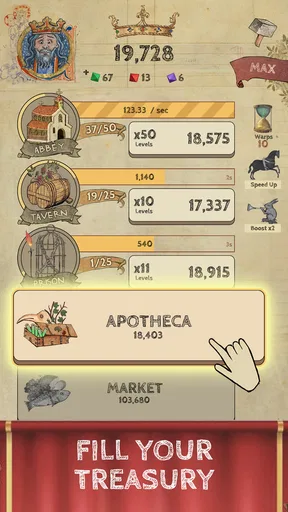
The strongest part of this format is that it turns small choices into visible momentum. A building decision is not just a button press; it represents a choice about how quickly the kingdom can grow and how much attention I want to give it. Automation is especially important to the game’s identity because it reduces the need to supervise every individual step. Once the basic routine is established, the interesting question becomes what to improve next rather than what to tap every second.
That also explains the main limitation. If you need a game that constantly tests reflexes, offers detailed tactical battles, or gives you a large map to explore, this is unlikely to satisfy you. Its appeal depends on being comfortable with gradual progress. The medieval theme provides atmosphere and direction, but the core pleasure comes from managing an evolving production loop.
Why automation changes the way I played
Automation is more than a convenience here. It changes the way I think about the kingdom. Instead of treating every resource gain as something that requires active input, I use the early part of a session to make the system more dependable. That creates a practical workflow: first check what the kingdom has produced, then make the upgrade that improves the weakest part of the chain, and only after that consider a more ambitious improvement.
This approach is useful for new players because it prevents a common idle-game mistake: spending everything on the most visible upgrade while ignoring the bottleneck underneath it. When progress slows, I would look for the part of the kingdom that is holding everything else back rather than automatically choosing the most expensive-looking option. That habit makes the game feel more strategic without pretending that it has the complexity of a full-scale kingdom simulator.
There is also a trade-off. Automation can make the game feel wonderfully relaxed, but it can reduce the sense of urgency. The best sessions are the ones where an upgrade noticeably changes the next return visit. If the current decision feels too small to matter, the waiting period may feel less rewarding. Players who enjoy constant manual control may see this as a weakness, while players who want a low-pressure routine will probably see it as the point.
Playing in short visits instead of long marathons
I would not recommend approaching this as a game that needs a long uninterrupted evening. Its structure is better suited to repeated short visits. A realistic everyday scenario would be checking the kingdom before work, making one or two sensible improvements, and returning later to see whether the automated systems have created enough progress for the next decision. That makes it easy to fit around other activities without requiring the player to remember a complicated sequence.
For the smoothest experience, I would avoid spending resources immediately after every small gain. Waiting until there is enough progress to make a meaningful improvement gives each visit a clearer purpose. I also found it helpful to decide in advance whether a session was about strengthening the current routine or preparing for a larger change. That simple distinction prevents aimless tapping and makes the kingdom feel more like something I am managing rather than a meter I am merely watching.
The downside is that the game may feel thin if played continuously. Idle simulations naturally repeat their core actions, and this one is no exception. Its value comes from the long-term pattern of decisions, not from a huge variety of activities in every session. If you prefer a game to surprise you constantly, a more event-driven strategy title would probably be a better match.
What the current release tells me about expectations
The game is currently at version 0.5, so I would approach it as an experience that may still be developing. That version label matters when deciding how much variety and polish to expect. I enjoyed the focused concept, but I would not compare its present scope with a mature, content-heavy simulation that has had years to expand its systems.
The release date is May 25, 2026, and the game has already reached over one hundred thousand installs. Its average rating is 3.7 from around one thousand ratings, with close to two hundred written reviews. I read that combination as a sign of a game with a real audience but a mixed reception. It is worth trying personally rather than assuming the premise alone guarantees a perfect fit.
The minimum operating-system requirement is Android 7.1, which makes the game accessible to people using older compatible devices. That is helpful for an idle title because many players want something that can sit alongside their everyday phone use instead of demanding the newest hardware. Still, device comfort, battery behavior, and interruptions can affect any game built around returning regularly, so I would judge the experience on the phone I actually plan to use rather than on the specification alone.
Cost, value, and the limits of the free experience
I weigh the free starting point against the optional purchases by asking whether I’m enjoying the ordinary pace before paying to change it. Since purchase options span a wide range, I’d set a personal limit in advance and treat any spending as a choice, not a requirement. That makes it easier to judge value on your own terms and leads naturally to the question of where the free experience may stop being enough.
What I can say about the price
Medieval Idle King is free to download and play, which removes the biggest barrier to trying its basic concept. I could begin without paying an entry fee and decide whether the kingdom-building loop suited me before considering any purchase. That is the right pricing model for an idle simulation because the central question is not whether the theme sounds appealing, but whether the pace of progress feels satisfying over repeated visits.
The game includes optional in-app purchases ranging from $0.99 to $99.99 per item. I would treat that range carefully. It tells me that the game offers paid purchase options at several levels, but it does not by itself prove that spending is necessary or that every purchase offers good value. My recommendation is to play the free portion long enough to understand the normal rhythm before paying for acceleration or convenience.
That distinction is important: free access gives you a chance to evaluate the design, while paid value depends on whether a purchase improves your enjoyment rather than simply shortening the waiting. If I were considering spending, I would ask whether I am buying a new decision to make or merely removing time from a loop I already enjoy. For an idle game, that is the clearest test of value.
When spending may make sense
A small purchase can be easier to justify if it supports a play style you already know you enjoy. For example, someone who likes checking the kingdom several times a day may value a convenience that makes those visits feel more productive. In contrast, a player who is still unsure about the pace should keep the game free until the basic loop proves itself.
I would be cautious with the highest-priced purchase tier. A large payment deserves a clear reason, especially in a game whose appeal is gradual accumulation. If the main benefit is simply reaching the next milestone sooner, the purchase may reduce the very anticipation that makes idle management enjoyable. I would rather spend only after identifying a specific frustration and confirming that the purchase addresses it.
Parents should also remember that an Everyone rating describes the content audience, not the spending decision. The game can be suitable for a broad age range while still containing optional purchases. On a shared device, I would use the platform’s purchase protections and make sure younger players understand that free installation does not mean every in-game option is free.
Where the game delivers value without payment
The free starting point has real value because it lets different kinds of players test the same question: do I enjoy building a system that keeps moving when I am away? That is more useful than a short trial focused only on the opening minutes. Idle games often feel appealing at first and repetitive later, so the ability to return over several ordinary days is important when judging whether this one belongs on your phone.
I also see value in the game’s low commitment. It can serve as a background activity between more demanding games. I do not need to reserve my full attention for every visit, and I can use it when I want a small sense of progress without entering a long match or learning a complicated control scheme. That makes it a reasonable companion game for people who already have a more intense main title.
However, free access does not automatically mean unlimited value. If the progression feels too slow for your patience, or if you dislike waiting for automated systems to produce results, the absence of an entry price will not solve the underlying mismatch. The sensible approach is to judge the pace, not just the cost.
How it compares with other simulation choices
Compared with a traditional city-builder, this game is easier to dip into but offers less reason to micromanage every road, citizen, or supply route. A city-builder is usually the better choice if you want detailed planning and immediate consequences from layout decisions. This medieval idle title is better when you want the feeling of development without the responsibility of continuously maintaining a large settlement.
Compared with an active strategy game, it asks less of your attention and gives you fewer moments where quick reactions decide the outcome. That makes it calmer, but also less dramatic. If you want battles, direct control, or a strong competitive layer, I would look elsewhere. If you want to make a few economic choices and let the kingdom continue in the background, its narrower design is an advantage.
It also differs from a purely casual tapping game because automation gives your choices a longer shadow. The goal is not only to generate a burst of activity in the current moment. It is to organize the kingdom so that future returns are more productive. That extra layer is modest, but it is what gives the medieval setting a management purpose instead of making it purely decorative.
Who should install it, and who should skip it
I would recommend trying it if you enjoy idle progression, light resource planning, and the satisfaction of seeing a small system become more efficient. It is particularly suitable for people who want a free game that can be checked in short sessions and who do not mind that the most important progress may happen while they are away.
I would be less enthusiastic for players who need a strong story, fast combat, deep diplomacy, or a large collection of distinct activities. The game’s focused loop is its strength, but focus can feel like repetition when your preferred idea of simulation involves constant new problems. I would also skip it if you dislike optional purchase structures on principle, even though you can start without paying.
For younger players, the Everyone rating makes the content broadly approachable, but I would still treat the purchase options as a separate consideration. For older phones, the Android 7.1 minimum is reassuring, though the best experience will still depend on how comfortably the particular device handles regular play.
My practical verdict
After using it as intended, I see Medieval Idle King as a modest but understandable idle simulation rather than a complete medieval world. Its best quality is the way it turns a chaotic kingdom premise into a manageable routine: collect progress, identify the next useful improvement, strengthen automation, and return later. That loop can be satisfying when I want something calm and incremental.
Its weaknesses are equally clear. The current version suggests a still-growing product, the mixed average rating encourages realistic expectations, and the slow nature of idle progression will not suit everyone. The optional purchases also mean I would not judge the game only by its free download status; I would first decide whether the unpaid pace is enjoyable enough to keep playing.
My recommendation is to try it free, play through several short return visits, and spend only if a specific convenience genuinely improves your routine. If you want a relaxed kingdom project that works around your schedule, it is worth a look. If you want a rich medieval strategy game with constant control and dramatic decisions, your money and time would be better directed toward a more traditional alternative. For the right player, though, this small realm has a pleasant rhythm, and the free starting point makes discovering that fit relatively easy.
Verdict
Strengths of Medieval Idle King
- Simple idle mechanics make progress easy to manage in short sessions.
- Medieval theme gives the game a charming and recognizable atmosphere.
- Offline earnings let your kingdom grow even when you are not playing.
- Multiple upgrades provide clear goals and a satisfying sense of progression.
- Lightweight gameplay is suitable for casual players and older devices.
Limitations of Medieval Idle King
- Progress can feel repetitive once the main upgrade cycle becomes familiar.
- Waiting for resources may encourage frequent returns or optional ad viewing.
- Strategic depth is limited compared with more complex kingdom simulators.
- Late-game upgrades may require considerable time to unlock.
- Some players may find the idle format too passive and hands-off.
Other Releases by MTAG PUBLISHING LTD
View All
Train Ride
Arcade4.5
Similar Picks in This Category
View All
Truckers of Europe 3
Wanda Software4.3

Town Building Life Simulator
XGame Global4.2

Fidget Toys Trading・Pop It 3D
Freeplay Inc4.7

Sculpt People
CrazyLabs LTD4.4

Scary Teacher 3D
Z & K Games4.2

Hair Tattoo: Barber Shop Game
CASUAL AZUR GAMES4.3
Frequently Asked Questions
What is Medieval Idle King?
Medieval Idle King is an idle and management game in which you develop a medieval kingdom, improve buildings, collect resources, and strengthen your ruler over time. Much of the progress continues through automated production, so you can make advancements even when you are not actively playing. The game combines simple controls with gradual kingdom-building and upgrade-focused gameplay.
How does progression work in Medieval Idle King?
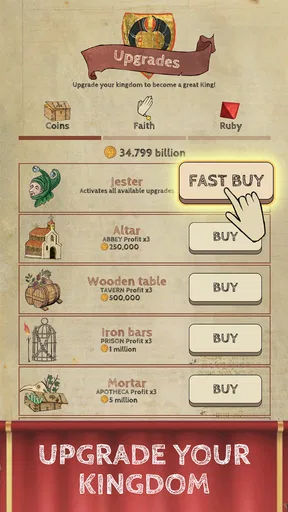
Progression is based on collecting income and resources, then investing them in upgrades for your kingdom, buildings, workers, and other gameplay systems. As your production improves, you can unlock additional features and handle more demanding objectives. The idle mechanics make progress accessible during short sessions, although reaching higher milestones may require patience and careful decisions about which upgrades offer the greatest benefit.
Can I play Medieval Idle King offline?
Some idle features may continue to function without a constant internet connection, allowing you to check your accumulated progress later. However, online access can still be necessary for advertisements, cloud-related functions, updates, events, or other connected services. Because offline availability may vary between versions and devices, it is best to confirm the current requirements on the Google Play Store or App Store before downloading.
Is Medieval Idle King free to download and play?
Medieval Idle King can generally be downloaded without an upfront purchase, but free access may include optional advertisements or in-app purchases. These purchases can potentially speed up progress, provide extra resources, or unlock convenience features, depending on the current version. You can usually play without spending money, although advancement may take longer if you choose not to use optional boosts.
Is Medieval Idle King suitable for casual players?
The game is designed to be approachable for casual players because its automated systems generate resources and reduce the need for constant attention. You can open the app for a few minutes, collect rewards, make upgrades, and leave again. Players who enjoy detailed strategy or fast action may find the pace relaxed, while fans of incremental progression and medieval management should find it easier to enjoy.
Play our best games!


